Best Portable Laser Engraver: Twotrees TS1 Leads
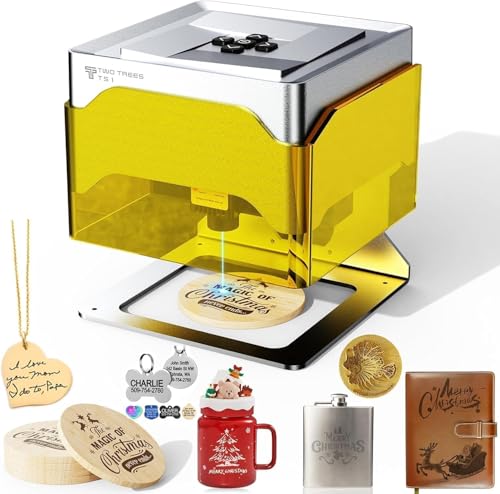
Five portable laser engravers compared on size, wattage and warranty, with the Twotrees TS1 Mini leading on footprint and safety for daily desk use.

By Ash MoralesUpdated 14 min read
On this page
- The 30-second shortlist for portable laser engravers
- Best portable laser engraver for everyday use at a glance
- How I narrowed 40-plus listings to five
- Wattage is not the deciding number
- 1. Twotrees TS1 Mini 3000mW Laser Engraver — Best overall
- 2. ACMER S1 Laser Engraver Machine — Best budget pick
- 3. BlazeX M3 10W Laser Engraver Machine — Best for heavy use
- 4. ELIDOR 6000mW Laser Engraver and Cutter Machine — Best compact
- 5. LaserPecker LP2 Laser Engraver with Roller — Best premium
- What does everyday use actually look like?
- Which materials will each of these handle?
- How long before you outgrow it?
- The verdict
- FAQ
The best portable laser engraver for everyday use is the Twotrees TS1 Mini, a 5.7 x 6.1 x 6.1 in enclosed 3W machine with a 2-year warranty that sits on a desk without asking for a dedicated room. The ACMER S1 is the alternate if you want the cheapest way in and can accept a 1-year warranty and an open frame instead of a sealed one.
The 30-second shortlist for portable laser engravers
Five machines, three profiles. If you want one desk-safe box that turns on and works, the Twotrees TS1 Mini is the best portable laser engraver for everyday use in this set. If your budget is the constraint and you can accept an open frame, the ACMER S1 covers the same beginner ground for less. If you plan to run projects most weekends and want more headroom, the BlazeX M3 brings a 10W module and a listed enclosure kit.
The other two are specialists. The ELIDOR Z6 wins on working area at a 300 x 300 mm bed. The LaserPecker LP2 is the one you buy for cylinders, because it ships with a rotary roller in the box.
Best portable laser engraver for everyday use at a glance
| Pick | Laser power | Frame / footprint | Price |
|---|---|---|---|
Best overall Twotrees TS1 Mini |
3000 mW | Enclosed 5.7 x 6.1 x 6.1 in |
Check Price |
Best budget pick ACMER S1 |
2500 mW | Open frame 6.38 x 9.84 x 9.84 in |
Check Price |
Best for heavy use BlazeX M3 |
10 W | Enclosure kit 8 lb machine |
Check Price |
Best compact ELIDOR Z6 |
6000 mW | Open frame 300 x 300 mm bed (claim) |
Check Price |
Best premium LaserPecker LP2 |
Galvo module | Handheld 8.66 x 5.91 x 5.91 in |
Check Price |


How I narrowed 40-plus listings to five
I started with the top listings under Engraving Machines & Tools that a maker could reasonably keep on a normal desk. Anything bench-bolted or shipping in a crate came off the list. So did every listing that gave no footprint, because a portable laser engraver for everyday use lives or dies on where you can put it when you are not using it.
Three cuts got me to five:
- Frame published. If the listing did not commit to dimensions, it was out. That knocked off several 20W monsters that fit the word portable in name only.
- Warranty stated. Every machine here publishes a warranty term. Two came off the shortlist for going silent on the question.
- Software route named. The listing had to name the app or the desktop software it works with. Guessing is not shopping.
What survived is a range: a sealed 3W desk box, a 2500 mW open-frame starter, a 10W workhorse with an enclosure kit, a 6W with the largest listed bed of the five, and a galvo-based handheld with a rotary roller. Every one is a portable laser engraver for everyday use in a different sense of the word.
Wattage is not the deciding number
Most guides sort a portable laser engraver for everyday use by wattage and stop. That order is wrong. Wattage sets your ceiling on cutting, not your daily experience.
What actually decides it for a desk user is the frame. A sealed body contains stray light and debris. An open frame does not, which means you need safety glasses on the whole time and a room you do not mind smelling of scorched wood. Twotrees leans on this in the listing: the TS1 Mini has, in their words, a fully enclosed acrylic cover that contains light and debris. BlazeX bundles a protective enclosure in the kit. The other three are open frames by default.
The second deciding number is footprint. The TS1 Mini's 5.7 x 6.1 x 6.1 in body is smaller than a bread bin. The ACMER S1 at 6.38 x 9.84 x 9.84 in wants roughly the surface of a chopping board. The LP2 stands 8.66 x 5.91 x 5.91 in with the roller attached.
Third is what the laser can actually touch. LaserPecker states plainly what the LP2 will and will not engrave, which is more honest than most listings manage.
1. Twotrees TS1 Mini 3000mW Laser Engraver — Best overall
A sealed 3W desk box with a 2-year warranty and the smallest footprint in the set, which is the combination that makes it the best portable laser engraver for everyday use.
Best for: desk crafters who want a sealed, one-box machine Skip it if: you need to cut plywood thicker than a business card
Only two machines in this set publish a fully enclosed frame, and the TS1 Mini is the smaller of them. Its 5.7 x 6.1 x 6.1 in body is the tightest footprint here, so it lives on a shelf between sessions and comes out for an hour without a ritual. The 2-year warranty is the longest of the five; every other pick lists one year.
Twotrees pitches the 3W module as tuned for detailed engraving and light cutting on thin materials. That is a fair fit for the everyday use case: wood tags, leather patches, painted metal, bamboo. Control runs over Bluetooth through the MKSLaser app, which is the reason there is no laptop tethered to it. That will suit some buyers and put others off, because phone apps come and go while desktop LightBurn does not.
The trade-off against the BlazeX is raw ceiling. If your projects grow into thicker cuts, you will feel the 3W lid. For the everyday case, that is exactly the point.
Pros:
- Fully enclosed acrylic cover contains light and debris
- Smallest footprint in the set at 5.7 x 6.1 x 6.1 in
- 2-year warranty, longest here
- Phone control over Bluetooth with the MKSLaser app
- Broad claimed material list including leather and painted metal
Cons:
- 3W ceiling limits cutting thickness
- Phone-app control is not for everyone
- Working-area size not stated in the listing
- Sales rank the slowest of the five
2. ACMER S1 Laser Engraver Machine — Best budget pick
The cheapest of the five, with a stated 2500 mW module and an aluminum-alloy frame that keeps setup down to a minute of laser-head fitting.

Best for: first-time buyers testing whether the hobby sticks Skip it if: you want a fully enclosed frame
The S1 is the entry point. ACMER's listing pitches a 2500 mW diode module with a 24W machine output figure, a 455 nm wavelength and a 2 mm focal length, and says the unit arrives 99% preassembled with a one-minute laser-head installation. That is a lower barrier than any other pick here.
The software route is proprietary: ACMER's own Acmerstudio is included free with the machine. That is fine when it works and awkward if you want LightBurn out of habit. The frame is open at 6.38 x 9.84 x 9.84 in, so plan on wearing safety glasses and running it in a room with airflow. The 1-year warranty matches the rest of the set except the Twotrees.
The trade this pick makes is the enclosure. You save on outlay and you lose the sealed body that makes the TS1 Mini easy to leave on a desk. If that swap is worth it to you, the S1 is the cheapest way to find out whether laser engraving is a hobby you will keep.
Pros:
- Cheapest of the five
- 99% preassembled, one-minute head install
- Aluminum-alloy frame in a 2 kg body
- Free Acmerstudio software included
- Broad claimed material list including PCB and ceramics
Cons:
- Open frame with no enclosure
- Proprietary software, not LightBurn out of the box
- 2500 mW is the lowest wattage here
- Warranty half the length of the Twotrees
3. BlazeX M3 10W Laser Engraver Machine — Best for heavy use
The only 10W module in the set, sold with a bundled enclosure, honeycomb and 13 practice materials, which turns it into a starter workshop rather than just a machine.

Best for: makers running batches most weekends Skip it if: you want the lightest thing on this list
The M3 is the one you buy when the everyday use is closer to every day. BlazeX lists a 10W laser module with a claimed 0.01 mm accuracy, and the bundle covers a protective enclosure, a tool kit, a honeycomb laser bed and 13 engraving materials. That is unusual in this price range. Software support is the widest here: LightBurn, LaserGRBL and CutLabX across Windows, macOS, iOS and Android, per the listing.
The Class 1 safety rating BlazeX cites is a real difference in kind from the open-frame picks, because the filter and enclosure combination is designed to keep operation safe without a separate goggle habit. The machine weighs 8 lb, which is portable in the sense of two-handed carrying, not in the sense of tucking under an arm.
The trade against the Twotrees is footprint and outlay. You gain a wattage ceiling that opens up thicker cuts and a starter kit that saves a scavenger hunt for consumables. You give up the smaller box on the desk.
Pros:
- 10W module, highest in this set
- Class 1 safety rating with filtered enclosure
- Bundled honeycomb and 13 practice materials
- LightBurn, LaserGRBL and CutLabX all supported
- 0.01 mm accuracy claim
Cons:
- Heaviest at 8 lb
- Premium price position among these five
- 1-year warranty, half the Twotrees
- Only one seller lists it
4. ELIDOR 6000mW Laser Engraver and Cutter Machine — Best compact
A 6W engraver with the largest listed working area of the five, a 300 x 300 mm bed on a body weighing 2.13 kg by the manufacturer's own numbers.

Best for: anyone needing a 300 x 300 mm bed that still stows away Skip it if: you need a listed working area larger than a shoebox lid
The Z6 solves a specific problem: you want a bigger canvas than the sealed picks give you, but not a permanent installation. ELIDOR states an 11.8 x 11.8 in working area with the machine itself at about 2.13 kg, so it goes on and off a desk without help. The 6W module sits between the Twotrees and the BlazeX on ceiling, and ELIDOR lists a 0.04 x 0.14 mm laser spot for fine detail work.
Software is the practical part: LaserGRBL and LightBurn on Windows, macOS and Linux, which matches what most tutorials assume you have. The listing names wood, leather, acrylic, cardboard, ceramic, glass and metal as workable materials, though as with every listing here, treat the metal claim as an oxide-coating or painted-surface claim rather than shiny stock.
The trade this pick makes is the frame. It is open by default, so you are back to safety glasses and airflow, and there is no enclosure in the box. If the bigger bed is the reason you are shopping, that swap is easy. If not, the sealed picks are the better answer.
Pros:
- Largest listed working area at 300 x 300 mm
- Compact 2.13 kg body for a full-bed engraver
- LightBurn and LaserGRBL support
- 0.04 x 0.14 mm laser spot claim
- Mid price position in this set
Cons:
- Open frame, no enclosure listed
- Machine dimensions in the listing read as a placeholder
- 1-year warranty
- Only one seller stocks it
5. LaserPecker LP2 Laser Engraver with Roller — Best premium
The only pick here with galvo optics and a rotary roller in the box, which is what you buy when tumblers, pens and cylinders are half of what you plan to engrave.

Best for: tumbler and pen engravers who need a rotary roller in the box Skip it if: you plan to cut anything thicker than 0.2 in
The LP2 is the specialist. LaserPecker cites galvo technology for faster engraving and pairs the unit with an electric roller that runs a Cylinder mode on tumblers and pencils. Nothing else in this set ships that hardware. The body measures 8.66 x 5.91 x 5.91 in and includes an electric stand, a conical protective cover, safety glasses and two Type-C cables per the listed package.
LaserPecker is also the only manufacturer here that spells out what the machine will not engrave, which is pure metal and shiny metal. Cutting is capped at 0.2 in thickness in wood and paper. That is honest, and it is the specification to weigh against the BlazeX if cutting is the point of the purchase.
The trade is money. This sits at the top of the price positions in this set, and the warranty is 12 months, the same as the ACMER and the ELIDOR. What you get for the outlay is portability in a different sense: the LP2 is genuinely handheld, and the roller turns a flat engraver into a cylinder engraver without a second machine.
Pros:
- Galvo module, only one in this set
- Electric rotary roller included
- Handheld form factor with electric stand
- Honest listed material limits
- Laser safety glasses included in the box
Cons:
- Most expensive pick here
- Cutting capped at 0.2 in thickness
- Will not engrave pure or shiny metal
- 12-month warranty
What does everyday use actually look like?
Everyday use is not a specification the listings recognise, which is why the modifier is a shopping consideration rather than a filter. Amazon returned these five for the query, and none of them are labelled everyday. You have to define the phrase for yourself.
For most buyers, three things sit under it:
- Setup time under five minutes. Sealed or preassembled bodies win here. The Twotrees and the BlazeX both keep the wiring off the desk.
- Storage that does not need a garage. A footprint under a foot square matters more than a wattage figure. The TS1 Mini and the LP2 clear that easily.
- Software you can open without a tutorial each time. LightBurn support on the BlazeX and the ELIDOR helps here. Twotrees's phone app is faster if you never want a laptop involved.
If your definition of everyday is closer to every weekend of batch work, the BlazeX earns the extra footprint. If it means an hour on a Tuesday evening, the TS1 Mini is the more honest answer.
Which materials will each of these handle?
Every listing publishes a claimed material list, and every claim is the manufacturer's. Treat the following as what the seller promises rather than a lab report.
- Wood, bamboo, MDF, plywood: every pick in the set claims all four.
- Leather, paper, cardboard: every pick claims these.
- Painted or coated metal, brushed stainless: claimed by the Twotrees, the ACMER, the BlazeX, the ELIDOR and the LaserPecker. Pure shiny metal is disclaimed by LaserPecker and unlikely on any diode module here.
- Acrylic: claimed by the ACMER, the BlazeX, the ELIDOR and the LaserPecker. Note the LP2's 0.2 in cutting limit.
- Ceramics, glass, PCB, aluminum oxide: ACMER and ELIDOR name these specifically.
The pattern is that diode lasers in this class all handle organic materials easily and treat metals as a surface-marking job. Buy for the material you cut most often, not the outlier.
How long before you outgrow it?
The honest answer depends on which frustration hits first. Three thresholds decide it.
- Bed size. If your projects grow past a coaster, the sealed 3W picks feel small. The ELIDOR's 300 x 300 mm bed pushes that threshold out furthest in this set.
- Cutting depth. 3W and 2500 mW modules will score and etch, and cut only the thinnest stock. The 10W BlazeX buys real cutting headroom.
- Throughput. Galvo optics on the LaserPecker move faster than gantry-style diodes on repetitive small jobs, which is why it earns its position for tumbler batches.
If none of those bind, the TS1 Mini keeps working. If one does, you know which specialist to move to. Buying twice is not a failure. Buying the wrong first machine is.
The verdict
The Twotrees TS1 Mini is the best portable laser engraver for everyday use in this set because it collects the three qualities everyday buyers actually want: a sealed frame, a small 5.7 x 6.1 x 6.1 in footprint and a 2-year warranty that is twice what anyone else here publishes. It will not cut thick stock, and it does not pretend to.
Two conditions flip the pick. If money is the constraint and you can live with an open frame, the ACMER S1 is the honest starter and the cheapest way in. If your everyday is closer to weekend batches and you want a wattage ceiling that opens up cutting, the BlazeX M3 pays back its footprint with a 10W module, a bundled enclosure and support for LightBurn.
The ELIDOR Z6 is the pick for a bigger bed in a body that still stows away, and the LaserPecker LP2 is the answer only when cylinders and rotary work are half the plan. Decide which of those five profiles you are, and the ranking above answers itself without a spec sheet argument.
FAQ
What makes a portable laser engraver good for everyday use?
What makes a portable laser engraver good for everyday use is not wattage. It is the combination of a sealed or filtered frame, a footprint you can store between sessions and a setup routine short enough that you actually run it. The Twotrees TS1 Mini scores on all three at 5.7 x 6.1 x 6.1 in with a fully enclosed acrylic cover.
Is the Twotrees TS1 Mini worth it over the cheaper ACMER S1?
Is the Twotrees TS1 Mini worth the step up over the ACMER S1 depends on how much the enclosure matters to you. The TS1 Mini adds a sealed acrylic cover, a smaller 5.7 x 6.1 x 6.1 in footprint and a 2-year warranty against the ACMER's 1 year. The ACMER wins on outlay and on a slightly higher 2500 mW module in an open frame.
How much power do I actually need in a portable laser engraver?
How much power you actually need depends on cutting versus marking. For engraving wood, leather, paper and coated metal, the 3W in the Twotrees TS1 Mini is enough. For cutting plywood or thicker stock on a regular basis, the BlazeX M3's 10W module is the honest floor. The ACMER's 2500 mW is a marking-first specification.
BlazeX M3 or LaserPecker LP2 for tumblers and pens?
BlazeX M3 or LaserPecker LP2 for tumblers and pens is a clear split. The LP2 ships with an electric rotary roller and runs a Cylinder mode designed for that job, per LaserPecker. The BlazeX does not include a roller in the listed bundle. If cylinders are half of what you plan to engrave, the LP2 is built for it.
What is the biggest mistake first-time laser engraver buyers make?
The biggest mistake first-time laser engraver buyers make is chasing wattage on the listing headline and ignoring frame, footprint and software. A 20W open-frame machine that lives in a garage gets used less than a 3W sealed unit on a desk. Read the dimensions before the diode figure, and check that the software matches what your tutorials use.
The right way to start is to name your everyday first, then match the machine to it. If everyday means a Tuesday-evening hour of engraving wood tags and leather patches, the Twotrees TS1 Mini gets you there fastest, with the sealed frame that lets you leave it on a shelf and the 2-year warranty backing the purchase. Open the listing, check the current price against the ACMER S1 as your sanity anchor, and decide whether the enclosure is worth the step up. The rest of the shortlist is waiting for a more specific everyday: bigger bed, thicker cuts, or cylinders on a roller.